
Feature walls
Accent Walls and Feature Walls: A Calgary Guide
· 6 min read
An accent wall is the biggest change you can make to a room for the least money, and it is also the easiest one to get wrong. The colour is only half of it. The other half is which wall you choose, how carefully the edges are cut in, and whether the finish flatters the light in the room or fights it. Here is how to think it through before anybody opens a can.
Which wall should be the accent wall
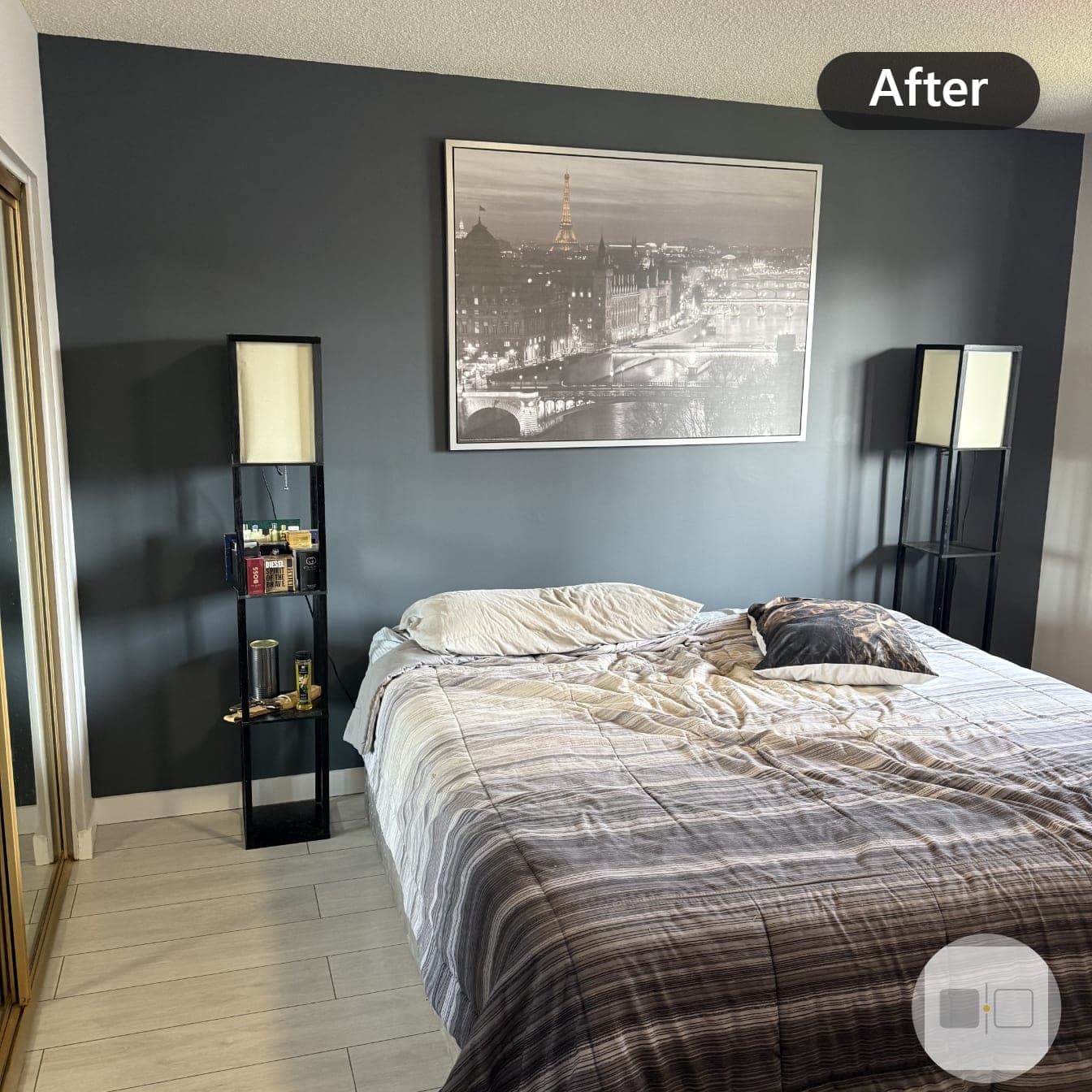
Most people pick the wall they look at most. That is usually the right instinct, but there is a better test: pick the wall the room is already built around. Rooms almost always have one, and painting any other wall fights the architecture instead of backing it up.
- In a bedroom, it is the wall behind the headboard. The bed already anchors the room, so the colour lands behind the thing your eye goes to anyway.
- In a living room, it is the wall with the fireplace, or the one the sofa faces. If you have both, choose the fireplace: it is a permanent feature, and furniture moves.
- In a dining room, it is the wall the table sits against, not the one your guests face.
- In a hallway or stairwell, it is the wall at the end of the sightline, the one you walk toward.
Two walls to avoid: the one with the most windows, because you will spend the whole job cutting in around casings for a colour that gets washed out by backlight anyway, and any wall broken up by several doors, because the colour ends up as disconnected strips rather than one surface.
Deep colours behave differently, and cost differently
This is the part that surprises homeowners. A deep charcoal, navy or forest green is not simply a darker version of a pale colour. Rich colours are made by loading a base with far more pigment and far less of the white titanium dioxide that gives ordinary paint its opacity. Less opacity means less hiding power, which means more coats.
A pale wall over a similar pale wall often covers in two coats. A saturated accent colour over an existing light wall can want three, and sometimes wants a grey tinted primer underneath first so the colour reaches its true depth instead of sitting thin and patchy. That is not a painter padding the quote. It is what the product needs to look like the chip you fell in love with.
It cuts the other way too. Going from a deep colour back to a light one is one of the harder repaints there is, because the old colour keeps ghosting through. That job usually needs a proper primer coat before any finish colour goes on.
When the feature wall is more than paint
A painted accent wall changes the colour of a room. A batten or panelled feature wall changes its texture and the way light moves across it, which is a different effect entirely. Raised trim casts small shadows that shift through the day, so the wall reads as deep and solid rather than flat.
Painting one is a different job from rolling a plain wall, and it is worth knowing why before you compare quotes. Every batten has two long edges that have to be cut in by hand. A wall with a diagonal lattice pattern can carry a hundred metres of edge that no roller will ever touch. The rolling takes an hour. The cutting in is the job.
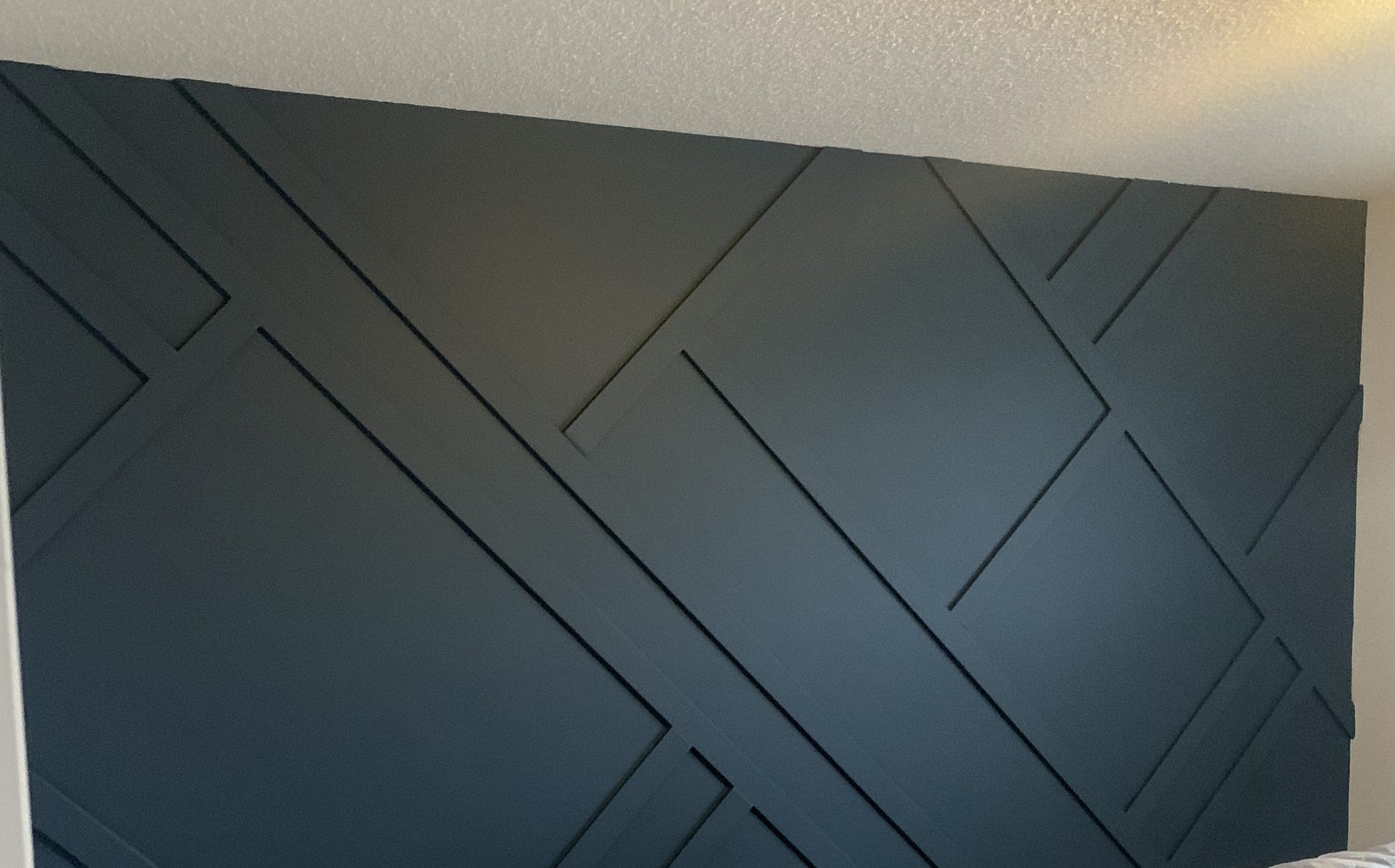
If you are pricing a feature wall like this, ask the painter to say plainly whether the quote covers painting the battens only or building them too, and whether the trim is being caulked and filled before finishing. Those two answers explain most of the gap between two very different looking bids.
Sheen matters more on a dark wall than a light one
On a pale wall, the difference between a matte and an eggshell finish is subtle. On a deep colour it is dramatic, because sheen is reflected light and a dark surface has nothing else going on to distract from it. Any shine picks up every window, every lamp and every roller mark.
For a deep accent wall, a flat or matte finish almost always looks richer. It absorbs light, so the colour reads as velvet rather than plastic, and it hides the small surface imperfections that a sheen would spotlight. The trade is washability, so a matte deep colour suits a bedroom far better than a hallway with a child running a hand along it.
Where the wall does need to be scrubbable, an eggshell is the usual compromise. Just be aware you will see more of the surface underneath, which raises the standard the prep has to meet.
What an accent wall does to a small room
The old advice was that dark colours shrink a room. It is not that simple. A dark colour on one wall makes that wall recede visually, so a narrow room can actually read as longer when the far end is the dark one. Put the same colour on a long side wall of the same room and it will feel narrower.
Ceilings are worth a thought too. Carrying an accent colour up onto the ceiling makes a room feel enclosed and intimate, which is lovely in a bedroom and oppressive in a small den. Stopping the colour cleanly at the ceiling line keeps the room feeling taller. Neither is wrong, but they are opposite effects and worth choosing on purpose.
The edges are the whole job
Nobody inspects the middle of an accent wall. Everybody inspects the corner where it meets the wall beside it, the line where it meets the ceiling, and the cut around the baseboard. A deep colour against a pale one is the least forgiving line in interior painting, because every wobble is visible from across the room.
Getting that line straight is a hand skill. Tape helps, but tape alone leaves bleed on textured drywall, so the line still has to be worked properly. If you want a fair way to judge finished work, ignore the colour and go and look at the corners.
Anyone can roll the middle of a wall. You are hiring for the last inch.
Getting it right the first time
Accent walls are the job homeowners most often try themselves and most often repaint within a year, usually because the colour went on thin, the sheen was wrong for the light, or the corner line wandered. Sampling properly helps: paint a large swatch on the actual wall, look at it in morning light and again under lamps at night, and only then commit.
A complimentary colour consultation comes with every Flying Post job, so you are choosing the wall, the colour and the finish with a professional rather than guessing from a chip in a store. Call or text (403) 926-7202, tell us which room you have in mind, and we will come and walk it with you.
Flying Post Painting is a residential painting company based in Calgary, Alberta. Proudly Indigenous owned. Call or text (403) 926-7202 for a free estimate.