Before we arrive
How to Prepare Your Home Before Painters Arrive
· 6 min read
Homeowners often ask what they need to do before painting day, and worry they are supposed to empty the house. You are not. A professional crew handles the heavy work, the covering and the protection. What helps most is a short list of small things only you can do, plus knowing what good preparation should look like once the work starts, because prep is where paint jobs are quietly won or lost.
The division of labour, plainly
Before the checklists, it helps to be clear about who does what. A lot of confusion comes from homeowners assuming they have to do work the crew should be doing, or the reverse.
- The crew moves and covers furniture, protects floors, masks trim and fixtures, fills and sands, primes where needed, paints, and cleans up.
- You put away small valuables and anything irreplaceable, take down personal wall items, and say clearly which things must not be moved or touched.
- Both of you agree, before day one, on exactly which rooms and which surfaces are in scope. Ceilings and trim in particular. A written quote should already name these.
That last point prevents the most common friction on a job. If the quote says walls and you assumed ceilings, that gap surfaces at the worst possible moment. Read the scope line before the crew arrives, not after.
The week before
None of this takes long, and all of it saves time on the day.
- Take down photos, art, mirrors, curtains and curtain rods. Leave the hardware in the wall if you want it back in the same place, or tell the crew you want the holes filled and gone.
- Empty and remove anything hanging on the walls you are unsure about, including wall mounted televisions if you want the bracket area painted properly behind it.
- Put away jewellery, documents, medication and anything small and valuable. This is standard advice for having any trade in your home and no reflection on the crew.
- Decide your colours and confirm them in writing. Changing your mind after the first coat is on is the most expensive change you can make.
- Point out any problem you already know about: a damp patch, a crack that keeps coming back, a stain that has bled through before. These change the prep, and a painter would rather know in advance than discover it halfway.
The morning of
- Clear a parking spot near the door if you can. Ladders, drop sheets and pails come in and out all day.
- Make sure the crew can get in, and agree how they get in on later days if you will be at work.
- Point out the bathroom they should use and where they can fill and empty a bucket.
- Say where pets will be and whether any door must stay shut. This one matters more than people expect.
- Walk the rooms together once, out loud, before anything is covered. Five minutes here prevents most misunderstandings.
What good preparation actually looks like
Once work begins, you can judge the crew long before any colour goes on. Preparation is the least glamorous part of painting and the part that decides whether the finish still looks right in three years. It is also the easiest place to save money by cutting corners, which is exactly why cheap quotes are usually cheap here.
In a properly prepped room you should be able to see the work that has been done, because it is deliberately visible before the paint covers it.
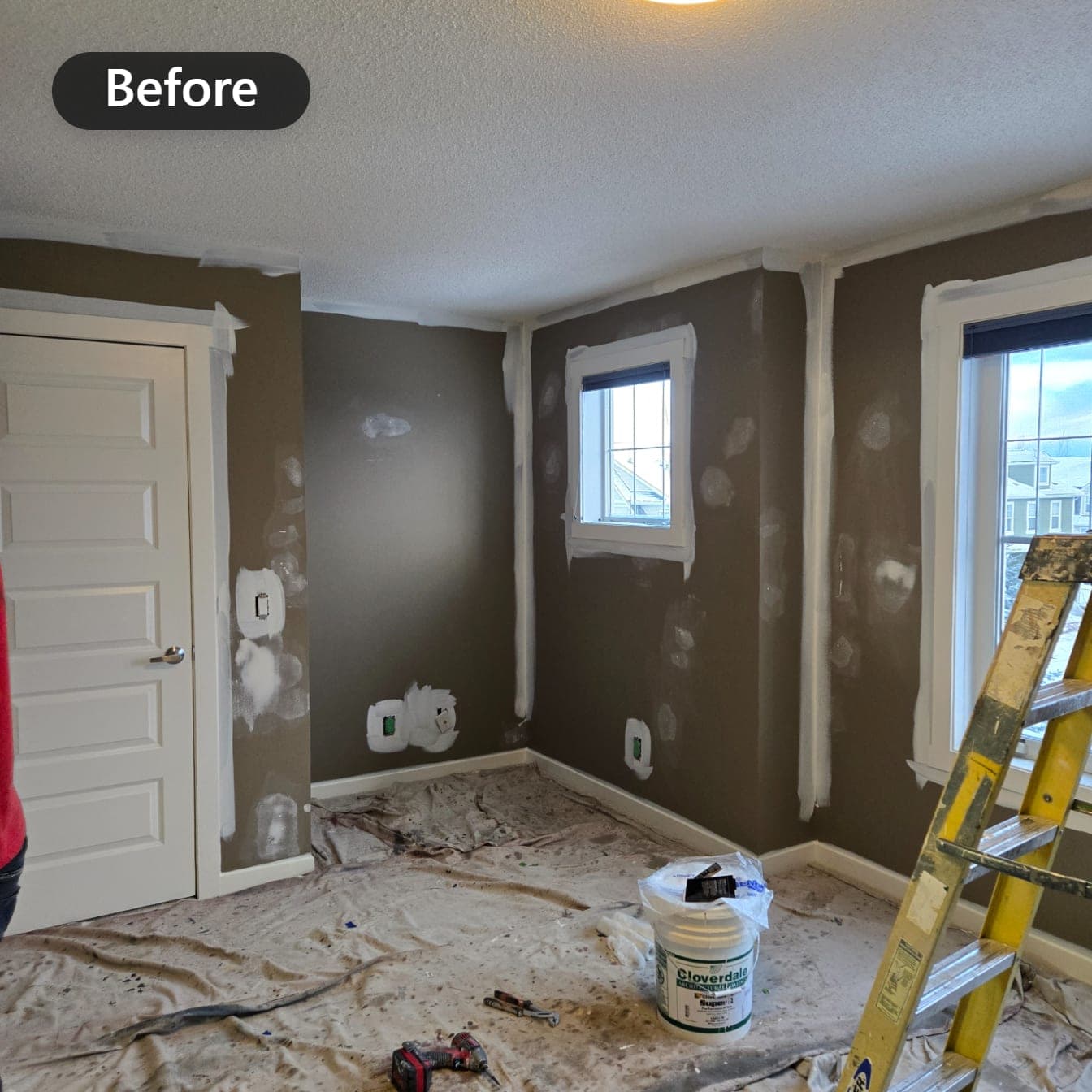
- Floors covered wall to wall, not just a sheet under the ladder. Carpet in particular should be fully protected.
- Furniture moved to the centre and covered, not shoved against a wall and left bare.
- Nail holes and dents filled, then sanded flat. You should see pale patches across the wall at this stage.
- Trim, casings, switch plates and fixtures masked, and switch plates taken off rather than painted around.
- Glossy or stained surfaces scuffed or primed so the new coat has something to grip.
- Dust wiped down before painting. Paint over dust and it will not bond properly.
If a crew arrives and starts rolling within twenty minutes, that is worth a question. On most repaints the preparation takes longer than the painting does.
Living in the house while the work happens
Most homeowners stay put, and that is usually fine. Modern interior paints are far lower in odour than they once were, and a well run job contains the mess to the rooms being worked on.
A few practical things make it easier. Plan for the painted rooms to be out of use for the day, and for furniture to be back but not fully settled until the following day. If you work from home, tell the crew where you will be sitting so they can sequence the rooms around you. If anyone in the house is sensitive to smell, ask about low odour or low VOC products at the quote stage, because that is a product decision made before the job, not during it.
In winter, ventilation takes a little more planning, since opening every window is not realistic in Calgary for much of the year. A good crew will work that out with you rather than leaving you to it.
Pets, children and the doors that matter
Wet paint, open doors and curious animals are a bad combination, and a cat that gets outside is a far worse problem than a scuffed baseboard. Decide in advance which room the pets stay in, tell the crew, and put a note on that door.
Small children and freshly painted trim at exactly hand height deserve the same thought. Paint that is dry to the touch is not cured, and a handprint pressed into a day old finish can leave a permanent mark.
The walkthrough at the end
Ask for a walkthrough before the crew packs up, and do it in daylight if you can. Look along the walls rather than straight at them, since raking light shows missed spots that a face on view hides completely. Check the cut lines at the ceiling, the corners, and the edge where the wall meets the trim.
Anything you flag then gets fixed on the spot. Anything you notice a week later is a phone call and a return visit. Every Flying Post job ends with that walkthrough together, and Respect Your Home is one of the three promises the work runs on, which means floors covered, furniture protected and the space left clean when we go.
Call or text (403) 926-7202 and tell us what needs painting. We will walk the space with you and put the full scope, prep included, in a written quote before anything starts.
Flying Post Painting is a residential painting company based in Calgary, Alberta. Proudly Indigenous owned. Call or text (403) 926-7202 for a free estimate.