
Finishes explained
Paint Sheen Guide: Matte, Eggshell, Satin or Gloss
· 6 min read
Most people spend weeks choosing a colour and about four seconds choosing a sheen. That is backwards. Sheen decides how washable the wall is, how much of the surface underneath you will see, and how the colour reads at seven in the evening with the lamps on. Two walls in the same colour and different sheens can look like two different colours. Here is what each finish actually does.
What sheen actually means
Sheen is simply how much light a dried paint film bounces back at you instead of scattering. It comes from the ratio of binder to pigment in the can. More binder gives a tighter, glossier film. More pigment gives a more open, matte one.
That single ratio drives everything else, and it drives two things in opposite directions. The binder that makes paint shiny is also what makes it tough and scrubbable. The pigment that makes paint flat is also what lets it swallow surface flaws. So every sheen decision is the same trade: durability on one side, forgiveness on the other. There is no finish that gives you both.
Shine buys you washability and charges you in visible flaws.
The sheen ladder, flat to gloss
- Flat and matte: almost no reflection. Hides roller marks, patched drywall and wavy walls better than anything else. Historically hard to clean, though modern washable mattes have narrowed that gap considerably. Best on ceilings and on walls you want to look rich rather than bright.
- Eggshell: a very low sheen, roughly the look of an actual eggshell. The usual default for interior walls in a home because it wipes down without spotlighting every imperfection. If you cannot decide, this is normally the safe answer.
- Satin: a soft, noticeable shine. Tougher and easier to clean than eggshell, which makes it a common pick for hallways, kitchens, bathrooms and children's rooms. It will show more of the wall underneath, so the prep has to be better.
- Semi gloss: clearly shiny and genuinely scrubbable. This is trim, door and cabinet territory, plus the occasional high traffic wall. It shows absolutely everything, so surfaces have to be filled and sanded properly first.
- High gloss: near mirror finish. Very hard wearing and very unforgiving. Used for feature doors, railings and details, rarely for whole walls in a house.
Room by room, what to use where
There is no single rule, but there is a sensible default for most Calgary homes, and it is worth starting from it and only deviating for a reason.
- Living rooms, dining rooms and bedrooms: eggshell on the walls. Low traffic, and the softer finish flatters both the light and the drywall.
- Hallways, stairwells, entryways and mudrooms: satin. These are the surfaces that get touched, scuffed by boots and brushed by bags, and Calgary winters put grit and salt into that traffic.
- Kitchens and bathrooms: satin, or a purpose made moisture resistant product. Steam, splashes and repeated wiping are the whole problem here.
- Ceilings: flat, nearly always. A ceiling catches raking light from every window in the room, and any sheen at all will pick out every seam and roller lap.
- Trim, doors and casings: semi gloss. It takes the knocks, wipes clean, and the shine change is what visually separates trim from wall.
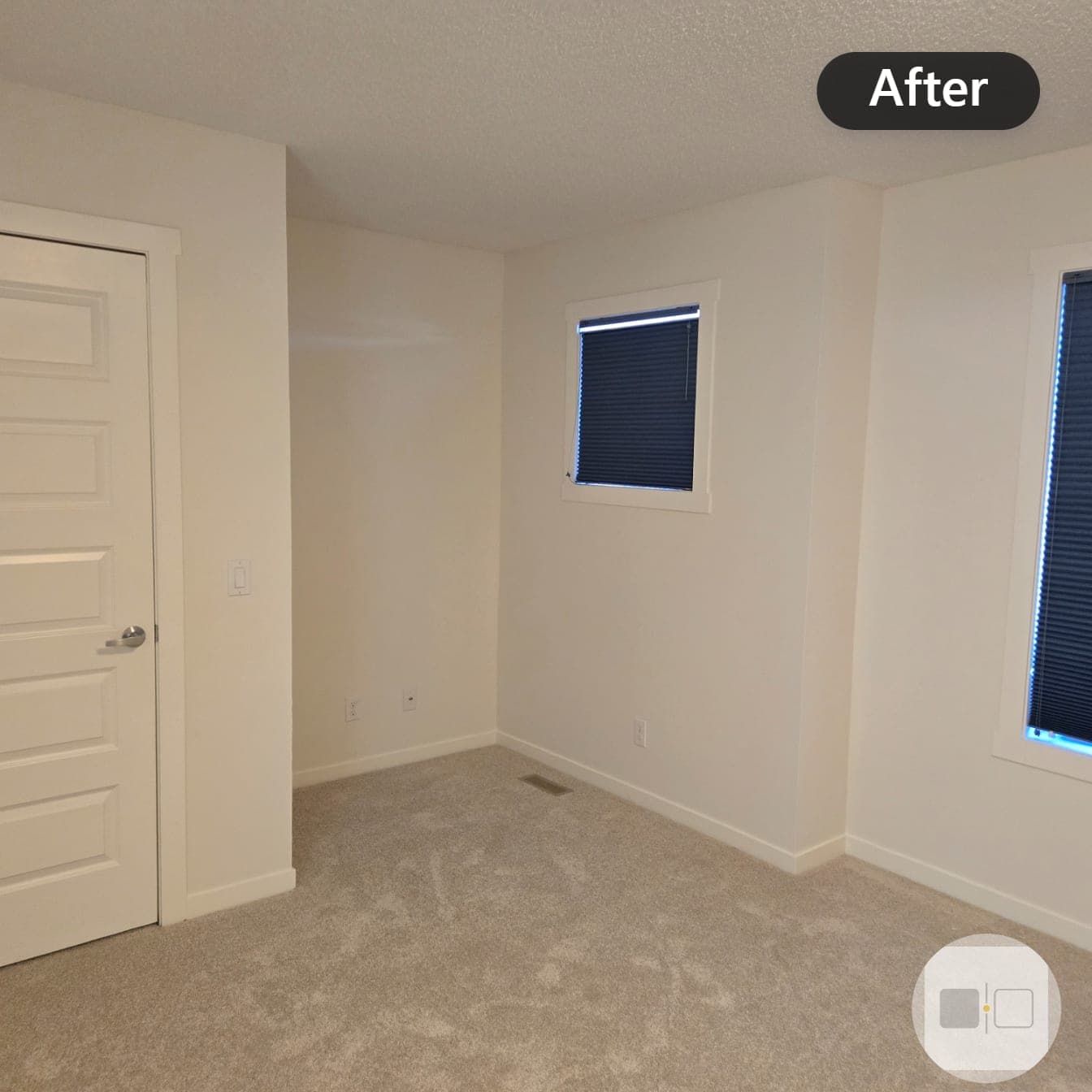
Sheen hides flaws, or puts a spotlight on them
This is the part homeowners discover too late. Sheen and surface condition are locked together. The higher the sheen, the more the wall underneath has to be perfect, because reflected light travels along the surface and every dent, ridge and sanding scratch throws a shadow.
This matters most on long walls that catch light from the side, which is exactly what you get in a hallway with a window at one end, or a stairwell. Put satin on a wavy old hallway wall and you will see every ripple in the plaster at four in the afternoon. Put flat on the same wall and it disappears.
So the honest sequence is: decide how good the surface is going to be first, then choose the sheen it can carry. A painter who tells you a high sheen needs more filling and sanding is not upselling you. They are telling you what the finish will reveal.
Why the same colour looks like two colours
Take one colour, put it on two walls in flat and in satin, and most people will swear they are different colours. They are not. The flat wall scatters light in every direction, so you see mostly pigment and the colour looks deeper and slightly duller. The satin wall bounces a portion of the light straight back, so you see pigment plus a veil of whatever light is in the room.
In practice, higher sheen tends to read lighter and slightly cooler in daylight, and warmer under lamps at night. This is why testing matters: when you put a sample on the wall, get it in the sheen you actually intend to use. A matte tester square tells you very little about how the satin version will look.
Where sheen goes wrong most often
- Touch ups that flash. Dabbing a repair into an eggshell or satin wall almost always leaves a visible patch, because the new paint dries at a slightly different sheen and lays down at a different thickness. Higher sheens make this worse. The fix is painting the full wall corner to corner, not spot repairing.
- Mixing sheens on the same plane. If one wall is eggshell and the wall it meets is satin, the corner between them will read as a colour change even when the colour is identical.
- Flat paint in a bathroom. It will look beautiful for a season and then start showing every splash mark you cannot scrub off.
- Semi gloss on a wall that was never prepped for it. This is the single most common way a DIY repaint ends up looking worse than what it replaced.
The short version
If you take one thing from this: eggshell on most walls, satin where life happens, flat on ceilings, semi gloss on trim, and better prep the higher you climb the ladder. Deviate from that when you have a reason, not by default.
Every Flying Post quote names the exact product and finish for each surface in writing, so the sheen is a decision you make on purpose rather than something you discover after the furniture goes back. Call or text (403) 926-7202 and we will walk the rooms with you.
Flying Post Painting is a residential painting company based in Calgary, Alberta. Proudly Indigenous owned. Call or text (403) 926-7202 for a free estimate.