
Exterior guide
Stucco, Fences and Decks: Exterior Painting in Calgary
· 6 min read
Drive through almost any Calgary neighbourhood and you will see the same three surfaces asking for attention: stucco walls, wood fences and backyard decks. Each one needs different products, different prep and a different maintenance rhythm, and treating them all the same is how exteriors fail early. Here is what good stucco painting, fence staining and deck refinishing actually involve in this city.
Why Calgary is a stucco city
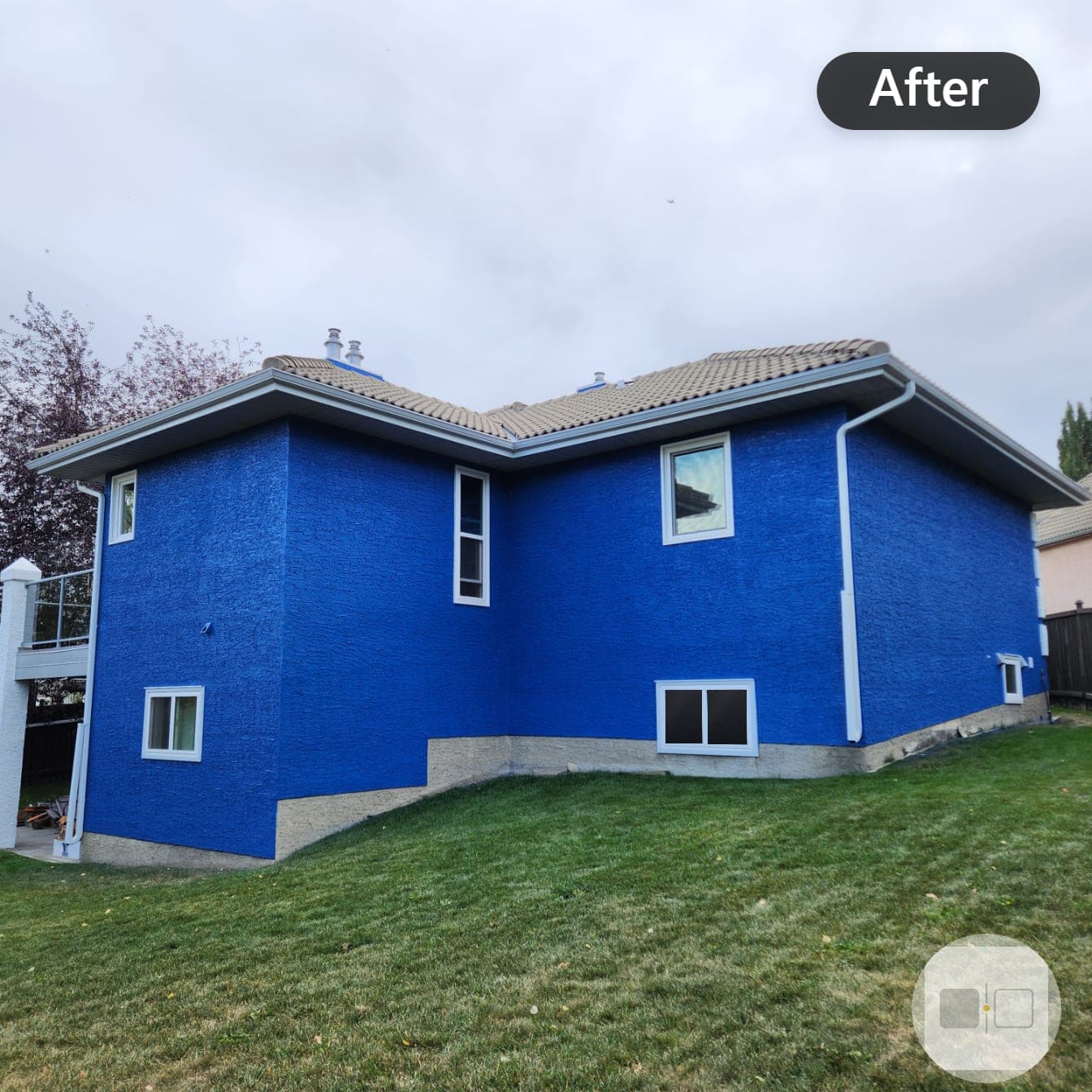
Stucco is everywhere in Calgary for practical reasons. It suits our dry climate, it shrugs off hail better than many sidings, and builders applied it across entire communities for decades. If your home went up almost any time since the 1970s, there is a good chance at least part of it wears stucco.
Painting stucco well starts with repairs, not paint. Calgary's freeze-thaw cycles open hairline cracks in the surface, and those cracks need to be filled with a flexible, paintable sealant before any coating goes on. Paint on its own will not bridge a crack, it simply follows it.
Product choice matters just as much. Stucco is porous masonry, so it wants a masonry-appropriate primer and a quality acrylic or elastomeric topcoat that stays flexible and lets moisture escape. Trapping moisture behind a cheap, brittle film is exactly how stucco coatings blister and peel.
The application method has a name worth knowing: spray and back-roll. The painter sprays the coating on for speed and even coverage, then a roller works it in while it is still wet, pushing paint deep into the texture. Spraying alone tends to coat only the high points and leaves tiny pinholes in the valleys.
Fence staining: why stain beats paint on wood
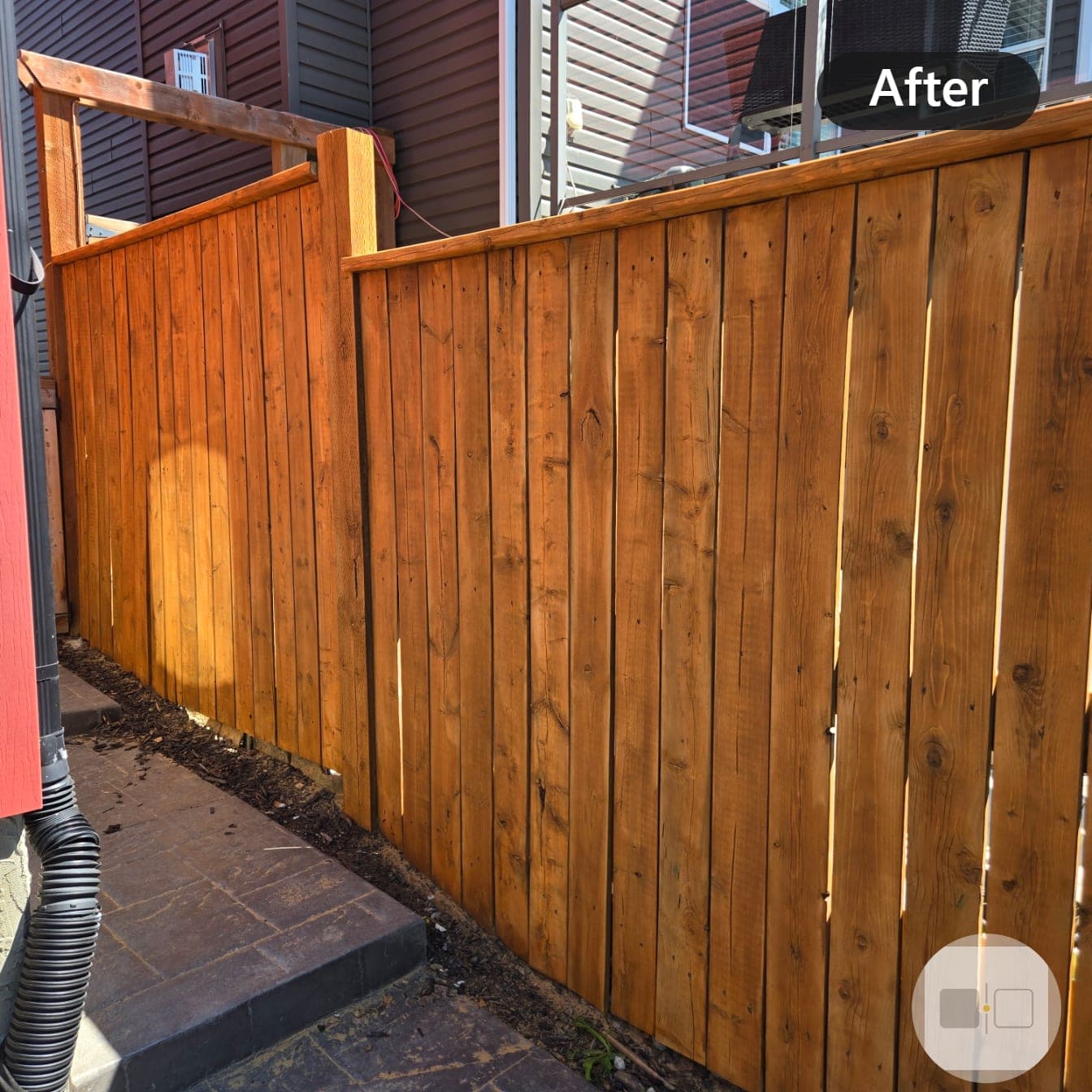
Paint forms a film that sits on top of wood. On a fence that bakes in sun and swings through Calgary's temperature extremes, that film eventually cracks and peels, and peeling paint must be scraped off before anyone can recoat. That is a miserable job across a hundred feet of fence boards.
Stain works differently. It soaks into the wood and wears away gradually by fading rather than peeling, so a maintenance coat usually means a clean surface and a fresh coat, not days of scraping. This is why professionals almost always recommend stain over paint for fences.
Your main choice is how much pigment you want. Transparent and semi-transparent stains show off the grain, which looks beautiful on cedar, but less pigment means less UV protection and a shorter life. Solid stains look closer to paint, hide older weathered boards, and give the longest protection while still letting the wood breathe.
Grey, weathered wood is not a lost cause either. That silver colour is a thin layer of sun-damaged fibres, and a wood cleaner or brightener followed by a light sand removes it, revealing sound wood underneath. Stain bonds to that fresh surface far better than it ever would to dead grey fibres.
Wood outdoors is always either protected or slowly failing. Stain is how you choose the first one.
One timing note: brand new pressure-treated wood often arrives too wet to stain and needs months to dry out before it will accept a finish. Cedar can usually be stained sooner, and it takes stain beautifully.
Deck refinishing: the hardest working surface you own
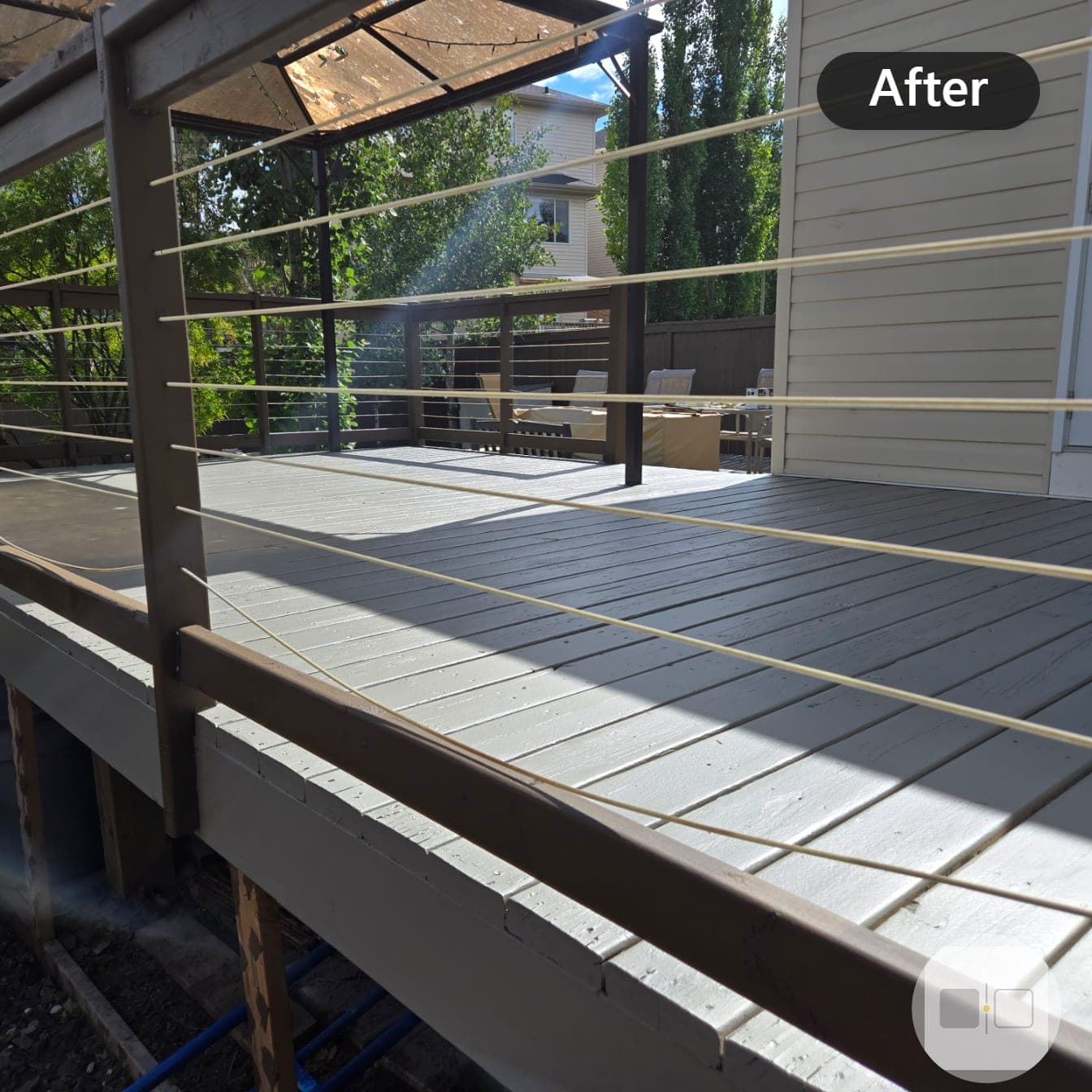
A fence mostly faces the weather sideways. A deck takes everything directly: full sun, standing snow, pooled rain, and foot traffic grinding grit into the finish all summer. That is why deck finishes wear out faster than anything else on your property.
Good deck refinishing is mostly preparation. The boards get washed, any loose or failing finish gets stripped or sanded off, and rough spots get smoothed so the new coat can grip. Then comes the step people skip: waiting for the wood to dry, which often means a day or two of warm weather after washing.
On traffic surfaces, solid stains made for decks are the usual choice for older boards, because they hide wear and stand up to footsteps. Newer wood in good shape can take a penetrating semi-transparent finish instead. Thick film-building products on old deck boards tend to peel wherever heels and chair legs work at them.
Drying time is real time. Most deck stains want around 24 to 48 hours before regular foot traffic, and a little longer before the furniture goes back, with cool or humid weather stretching both numbers. Rushing the furniture back on is one of the most common ways a fresh deck gets scarred in its first week.
How long each finish lasts in Calgary
No exterior finish is permanent here, and exposure decides most of it. South and west faces take the most sun, a sprinkler that soaks a fence every night shortens its life, and a shaded north wall can outlast the rest of the house. Treat the ranges below as general guidance, not a promise about any specific surface.
- Stucco paint: commonly 7 to 10 years on a well prepped job, sometimes longer on sheltered walls.
- Transparent and semi-transparent fence stain: often 2 to 4 years before fading says it is time.
- Solid fence stain: commonly 4 to 7 years, thanks to the heavier pigment load.
- Deck finishes: usually 2 to 4 years on the walking surface, because traffic wears finish faster than weather does.
The pattern is worth noticing: more pigment and better prep buy more years. A finish applied to clean, dry, repaired wood or stucco in the right temperatures will outlast the same product rushed onto a dirty surface, every single time.
How these smaller exterior jobs get quoted
Fences and decks are quoted differently than full houses. Calgary painters commonly price fence staining by the linear foot, with the height, the number of sides and the condition of the wood moving the figure, and decks by the square foot with rails and stairs counted separately. Stucco quotes usually turn on wall area, height and how much crack repair the surface needs.
Whatever the surface, a proper quote is written and itemized: the prep steps, the product going on, the number of coats and the price, all on paper before work starts. That is how Flying Post quotes every job, and the estimate itself is free. If you are torn between stain tones or stucco colours, a complimentary colour consultation is included too.
One practical note: these jobs bundle well. If your stucco needs paint the same season your fence needs stain, quoting them together often makes sense, because the setup and the trip are shared. Call or text (403) 926-7202 and tell us which surfaces are on your list.
Flying Post Painting is a residential painting company based in Calgary, Alberta. Proudly Indigenous owned. Call or text (403) 926-7202 for a free estimate.